
We use cookies to improve your experience. By continuing to use our site, you agree to our use of cookies.
Dashboard warning lights are your vehicle’s way of communicating with you. When you first turn on your ignition, it is completely normal for a cluster of symbols to illuminate briefly as the vehicle completes a routine system check. However, if one or more of these lights remain on—or trigger suddenly while you are driving—it means your engine control unit (ECU) has detected an active mechanical or electrical fault. Identifying these symbols correctly is vital to ensuring your safety and protecting your car from expensive, long-term damage.

To make troubleshooting straightforward, vehicle manufacturers use a universal, traffic-light-inspired colour coding system to indicate the severity of any active fault:
Green, Blue, or White Lights Are Informational: These symbols simply indicate that a specific system is currently operating correctly or is actively in use. This includes features like your headlights, main beams, cruise control, or lane-assist systems, and they require no mechanical action.
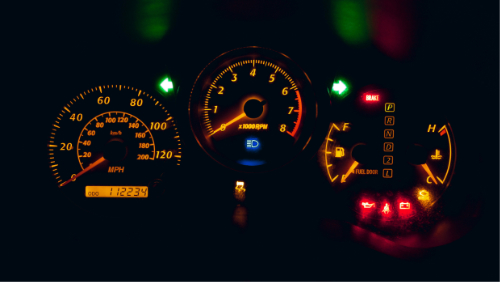
Think of dashboard lights like a traffic signal:
Red lights indicate a critical severity issue. If a red light illuminates, it is unsafe to keep driving. You should safely pull over, turn off the engine, and contact a professional immediately to prevent catastrophic mechanical failure.
Amber or yellow lights are advisory warnings. They signal that an issue has been detected (such as an engine management fault or low tyre pressure) that requires attention. You can usually complete your current journey safely, but you should book a diagnostic check-up as soon as possible.
If the engine management light is amber, you can generally drive the vehicle home or straight to a local workshop, provided the car feels normal to drive. However, if the amber light is flashing while driving, or if it turns red, you must stop driving immediately, as this indicates a severe engine misfire or malfunction that can permanently damage your catalytic converter or engine.
Yes, it is highly recommended. Many modern vehicle fault codes are intermittent. Even if the light turns off, the car’s Engine Control Unit (ECU) stores a historical fault code in its memory. Getting a professional diagnostic scan can reveal what triggered the light initially, allowing you to fix a minor issue before it escalates into an expensive breakdown.
Our professional plug-in diagnostic scan reads live data directly from your vehicle’s computers to pinpoint the exact fault code. Contact our team directly or call us for our current diagnostic pricing and availability. Most scans take under an hour, and we provide you with a full explanation of the fault alongside a transparent repair quote.
While budget plug-in readers can tell you a basic generic fault code, they cannot read deeper manufacturer-specific sub-systems (like advanced ABS, SRS airbags, or climate modules). Our workshop equipment utilizes advanced diagnostic software that interprets live data streams, sensor outputs, and component wiring layouts. This ensures we diagnose the root cause of the issue accurately the first time, saving you time and money on unnecessary parts.
Tap an active dashboard symbol to reveal your mechanical guidelines.
Unsure about a symbol fault code?
Book a professional diagnostic scan at our St Neots workshop.



Enter your registration number, and we’ll automatically find your vehicle details to get you started.
MOT Expiry: